
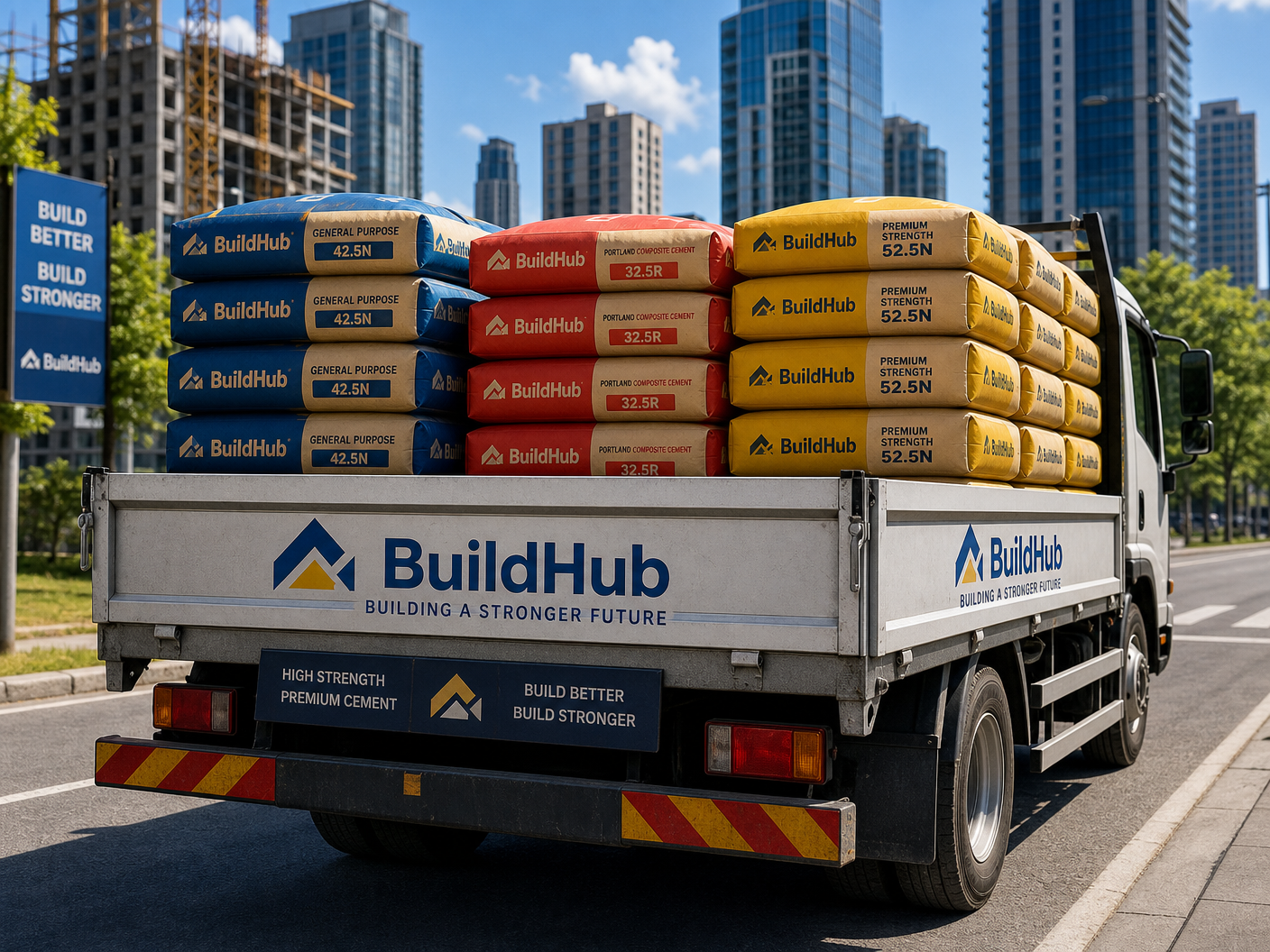
The Buildhub SulphateShield Sulphate-Resistant Cement is specifically formulated for concrete and mortar exposed to sulphate-bearing ground and groundwater conditions that would cause accelerated deterioration of standard Portland cement mixes. Sulphate attack occurs when sulphate ions from natural ground minerals (gypsum, pyrite) or industrial contamination penetrate concrete and react with the tricalcium aluminate (C3A) phase of Portland cement to form expansive compounds — primarily ettringite and gypsum — that generate internal expansion stress leading to cracking, spalling, and progressive structural degradation.
SulphateShield addresses this mechanism directly by limiting C3A content to below 3% — well within the EN 197-1 SR (sulphate-resistant) specification requirement — minimizing the quantity of reactive aluminate phase available for sulphate attack. The result is a cement that provides significantly enhanced resistance to sulphate-induced expansion and deterioration in Class XA1, XA2, and XA3 exposure conditions as defined in EN 206 and BS 8500-1.
Primary applications for SulphateShield include foundations in sulphate-bearing ground (particularly brownfield and made-ground sites), piling in chemically contaminated ground, sewer infrastructure in sulphate-rich environments, agricultural and industrial floor slabs subject to fertilizer and silage effluent exposure, and concrete in coastal and estuarine locations with elevated ground sulphate levels from marine sediment deposits.
Buildhub provides a site survey service to assist contractors in identifying appropriate cement class and mix design for specific sulphate exposure conditions. SulphateShield is supplied in 50kg bags and 1-tonne FIBCs with full EN 197-1 SR certification documentation.
Be the first to review “Buildhub SulphateShield Sulphate-Resistant Cement 50kg”
Related products

Uncategorized
Professional rapid-hardening cement achieving 20 MPa in 4 hours and 40 MPa at 24 hours, ideal for post setting, repair work, and applications requiring immediate load return.

Uncategorized
Dry-process shotcrete cement with accelerator compatibility and optimized fineness for tunnel linings, slope stabilization, and structural spray concrete applications.
Uncategorized
High-early-strength precast cement achieving 25 MPa at 18 hours, with consistent particle size for smooth release quality and efficient steam curing compatibility.
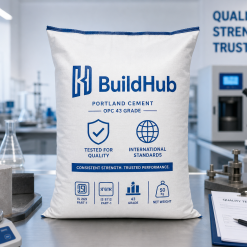
Uncategorized
Low-temperature antifreeze cement with incorporated frost-protection admixtures, allowing concrete placement and curing at ambient temperatures down to -5°C without external heating measures.
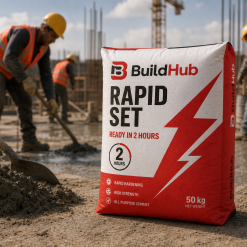
Uncategorized
Pre-blended masonry cement with incorporated lime and air-entraining agent, providing excellent workability, adhesion, and durability for brick, block, and stone laying mortars.
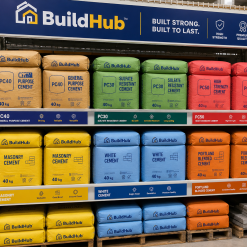
Uncategorized
Pumpable floor screed cement with fibre reinforcement and polymer modification, providing crack-free, flat screeds at 40-75mm thickness for domestic and commercial floor applications.
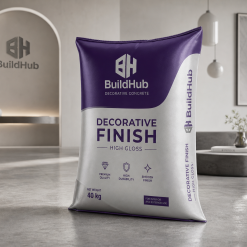
Uncategorized
Pre-blended render cement with graded aggregate and polymer modifier for crack-resistant, weather-tight external render coats on brick, block, and concrete substrates.
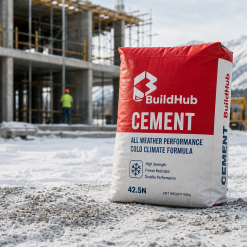
High-strength structural cement with 56MPa 28-day strength, low water demand, and enhanced durability for reinforced concrete foundations, pile caps, and below-ground structural elements.
Reviews
There are no reviews yet.